
Brainfit Tricks For ’26 – Part 10:
At Brainfit, we’re brain fitness and memory coaches. Throughout 2026 we’re sharing 52 weekly, science-backed Brainfit Tricks designed to strengthen memory, sharpen focus and build greater confidence at any age.
Here’s something pretty remarkable about your brain: It isn’t fixed.
Throughout life, your brain retains the ability to change and adapt in response to what you do, learn and experience. This ability is known as neuroplasticity.
Every time you learn a new skill, practise something you’re trying to master, encounter an unfamiliar experience or challenge yourself to think in a different way, you’re asking your brain to respond. And while our brains do change as we get older, the ability to learn doesn’t simply disappear with age. So this month we’re exploring four simple ways to give your brain reasons to keep adapting:
LEARN → MIX IT UP → STRETCH → PRACTISE
Think of it as a simple Brainfit formula for keeping your brain challenged and engaged.
What Exactly Is Neuroplasticity?
For a long time, scientists believed the adult brain was relatively fixed. We now know that isn’t the case.
Neuroplasticity describes the brain’s ability to change its structure, function or connections in response to experience, learning and environmental demands. Some of these changes happen because we need to adapt to injury or changes in our environment. Others happen through ordinary learning.
Think about learning to drive – At first, there seems to be an absurd number of things to think about at once. Mirrors. Indicators. Steering. Speed. Other cars. Road signs. Where you’re going. And apparently you’re also expected not to drive into anything. With experience and practice, many of those skills become easier and more automatic. Your brain has adapted.
The same principle applies when you learn a language, master a new dance step, navigate an unfamiliar neighbourhood, learn someone’s name or figure out how to use yet another piece of technology that was supposedly designed to make life simpler.
Your brain changes through experience.
Neuroplasticity and Cognitive Reserve: What’s the Difference?
You’ll often hear these two terms in brain-health conversations but what do they mean?
- Neuroplasticity is your brain’s capacity to change and adapt.
- Cognitive reserve is a way of describing the brain’s resilience, including its ability to maintain function or cope with age-related changes or brain pathology. Research suggests that experiences across our lives, including education, mentally stimulating activities, work, social engagement and continued learning, can contribute to improving your cognitive reserve.
You can think of it this way: Neuroplasticity is your brain’s ability to adapt. Cognitive reserve is some of the resilience you build over a lifetime of using it.
And importantly, supporting your brain isn’t something reserved for your “younger years”. There are opportunities to keep learning and challenging yourself throughout life.
Your Brain Needs More Than “Brain Games”
When people hear that they should challenge their brain, they often immediately think of crosswords, Sudoku or brain-training games.
Those can certainly be enjoyable and mentally demanding. But there’s an important distinction.
If you’ve completed the same type of crossword every morning for 20 years and can practically solve it while making your coffee, it may no longer be providing the same level of challenge it once did.
That’s because being good at something and being challenged by something aren’t necessarily the same thing.
Research into cognitive fitness increasingly points towards activities that involve genuine learning, novelty and an appropriate level of difficulty, rather than simply repeating something you’ve already mastered. Harvard Health, for example, recommends new activities that require thinking, learning and ongoing practice.
So don’t necessarily stop doing the crossword you love. Just occasionally give your brain something else to figure out too.
4 Brainfit Tricks To Keep Adapting Your Brain
LEARN → MIX IT UP → STRETCH → PRACTISE
Here’s how to put the Brainfit Formula to work:

Trick #39 – Learn Something New
The Science
Your brain remains capable of learning and adapting throughout life.
When you learn something genuinely new, you’re asking your brain to pay attention, process unfamiliar information and begin building and strengthening the neural connections involved in that skill or knowledge.
Why It Matters
It’s easy for life to become familiar. We develop routines, rely on skills we’ve already mastered and naturally gravitate towards things we know how to do.
But your brain benefits from continuing to encounter new information and experiences. Being a beginner requires something different.
- You have to concentrate.
- Make mistakes.
- Remember instructions.
- Solve problems.
- Adjust what you’re doing.
- And try again.
“Learning” doesn’t have to mean enrolling in university – the above is a considerable workout for a brain!
Try This
Learn one small new thing this week. It doesn’t need to be enormous for example: try a new recipe, craft or skill. Learn a few words in another language. Discover how to use a feature on your phone.
The subject matters less than the process but it helps to choose something you’re actually curious about.
Give your brain something interesting to learn – something it doesn’t already know.
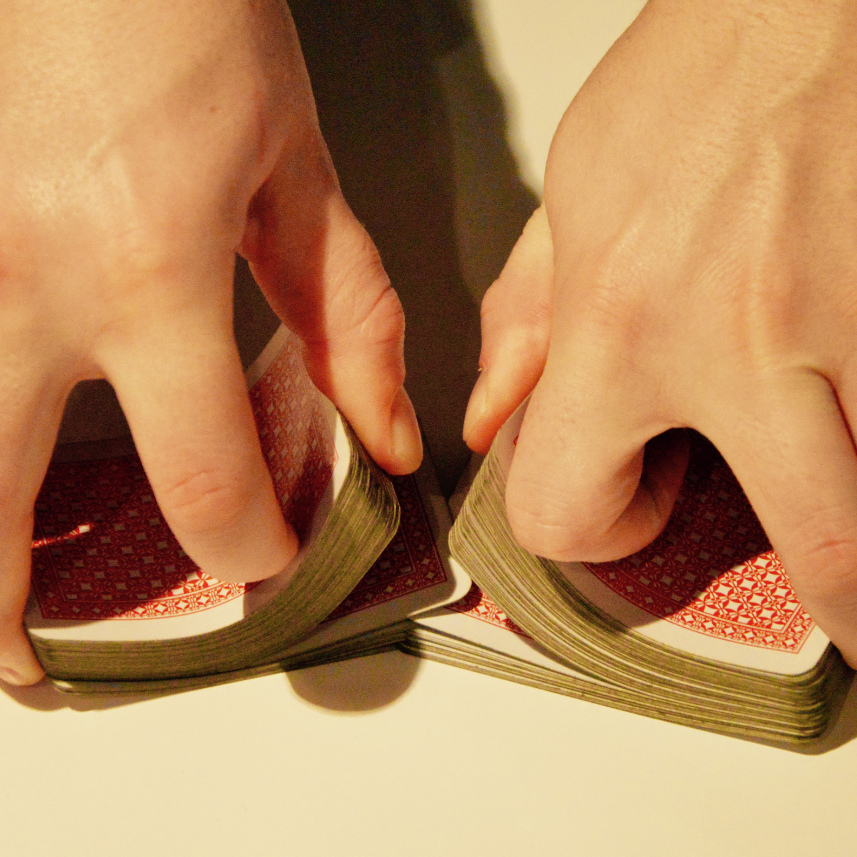
Trick #40 – Mix Things Up
The Science
Your brain is exceptionally good at becoming efficient.
When we repeat an activity frequently, it can require less conscious attention as it becomes familiar. That’s useful – imagine having to relearn how to brush your teeth every morning!!!
But occasionally introducing novelty and variety requires us to pay attention and respond to information differently, which in turn creates new neural pathways in our brain and strengthens others.
Why It Matters
Small changes can be enough to interrupt autopilot ensuring that we are giving our brain and memory a regular workout, as well as ample opportunities to grow.
Taking a different route means you have to navigate, a new recipe means following unfamiliar steps, meeting someone new means processing new information, trying a different exercise means coordinating your body differently.
Try This
Change one familiar routine this week. Maybe you could try: walking a different route with the dog, sitting somewhere different in your house, visiting a new café, cooking with an ingredient you’ve never used, listening to a different type of music or exploring somewhere in your own neighbourhood you’ve never visited before.
The point isn’t to make life inconvenient for the sake of it. It’s simply to give your brain something different to respond to.

Trick # 41 – Make It A Little Harder
The Science
There’s an important difference between activity and challenge.
For an activity to challenge and grow your brain, it needs to require some effort.
Once something becomes very familiar, easy or automatic, its important to increase the difficulty slightly to get the full ongoing benefit. Doing so requires greater attention, problem-solving or working memory – all things that will challenge and grow your brain, not just exercise what you’ve already got.
Why It Matters
This does not mean making things so difficult that you become frustrated and give up. The sweet spot is somewhere just beyond easy – something you can do, but can’t do completely on autopilot.
We like to think of it as stretching rather than straining.
Try This
Choose something you already enjoy and move it one step beyond comfortable. For example, if you do crosswords, try a harder one. If you play an instrument, tackle a slightly more difficult piece. If you cook, try making something new without checking every instruction repeatedly. If you’re learning a language, try having a short conversation rather than simply recognising vocabulary.
Don’t make it impossible. Make it interesting.

Trick #42 – Practise, Practise, Practise
The Science
Novelty gets plenty of attention when we talk about brain health, but new isn’t enough on its own. Learning requires practice.
Repeatedly retrieving information or practising a skill gives your brain further opportunities to reinforce and refine the patterns involved in that learning. Making the memory traces stronger, means the information is more robust and reliable when you need to recall them in the future
Over time, things that once demanded enormous concentration can become faster, easier and more accurate. That’s your brain adapting.
Why It Matters
Trying something once is an experience. Practising it is how you begin to learn it.
We sometimes abandon new activities because we’re not immediately good at them. But feeling awkward, slow or mentally stretched when you’re learning isn’t necessarily evidence that you’re bad at something. Most of the time, it’s evidence that you’re still learning.
Try This
Choose one thing you’re currently learning and return to it several times this week.
It could be five minutes practising names, ten minutes of a language, a few extra attempts at a new exercise or movement you are learning. Even revisiting something you learned recently without looking at your notes is a great way to practise and strengthen your memory.
Challenge introduces change. Practice helps reinforce it but you don’t need a marathon two-hour practice session – Learn it, come back to it, then come back to it again.
Putting The Four Together
Here’s where this months Brainfit Tricks become particularly useful.
You don’t need four separate activities. One good learning experience can contain all four elements. For example, lets imagine you decide to learn salsa dancing:
- LEARN: You’re acquiring unfamiliar steps.
- MIX IT UP: You’re doing something outside your usual routine.
- STRETCH: Over time, you progress to more complicated combinations.
- PRACTISE: You repeat the steps over and over until they become easier.
The same can be applied to whatever you’re “learning” – gardening, photography, cooking, music, technology, crafts, sport, languages and countless other activities. They all provide opportunities to combine novelty, challenge and practice.
Remember – the best activities for your brain and memory are the ones that keep asking you to learn and adapt.
What Happens When Something Becomes Easy?
When something becomes easy – celebrate it! You’ve learned something. Well Done.
But then you need to decide whether you’d like to take the next step. That might mean:
- Increasing the difficulty.
- Adding another skill.
- Applying what you’ve learned in a different situation.
- Teaching it to somebody else.
Or simply choosing something completely new.
Keeping your brain challenged doesn’t mean constantly abandoning skills once you’ve mastered them. It means avoiding the assumption that mastery is where learning has to stop.
A Simple Brainfit Challenge: Become a Beginner
This month, choose one thing you’ve always been curious about but never tried. It doesn’t need to become your new lifelong passion.
- Give it 20 minutes.
- Learn the basics.
- Notice what feels difficult.
- Try it again.
Then use our Brainfit formula:
LEARN – What do I need to know?
MIX IT UP – Can I approach it in a different way?
STRETCH – What’s the next slightly harder step?
PRACTISE – When will I come back to it?
Most importantly, give yourself permission not to be good at it immediately. Being a beginner isn’t evidence that your brain can’t do something. It’s an opportunity for your brain to learn how.
Want to Go Deeper?
If you’d like to explore neuroplasticity, lifelong learning and cognitive fitness further, these are our three picks:
🎧 Listen: You Can Learn New Things at Any Age – In this Podcast, cognitive psychologist Dr Rachel Wu discusses lifelong learning, why learning can feel harder as adults, the role of mistakes and feedback, and what kinds of learning experiences may help support cognitive agility as we age.
📖 Read: How Learning Protects the Aging Brain – This recent article from the American Psychological Association explores current research into learning and neuroplasticity in older adults, including work examining what happens when adults learn multiple new skills.
🎥 Watch: Growing Evidence of Brain Plasticity – This TED Talk is an oldie but a goodie. Neuroscientist Michael Merzenich’s explores the brain’s ability to change and “rewire” itself and some of the research that transformed our understanding of adult brain plasticity.
A Final Brainfit Reminder
Your brain isn’t fixed. It has spent your entire life responding to what you do, experience and learn. And there are opportunities to keep giving it reasons to adapt.
You don’t need to become a concert pianist, chess grandmaster or fluent Spanish speaker by Christmas.
Start small.
Learn something.
Change something.
Make something a little harder.
Then come back and practise it again.
Remember your Brainfit formula: LEARN → MIX IT UP → STRETCH → PRACTISE
Keep giving your brain reasons to adapt.
Don’t forget to 👉 Follow Us on Social Media and👉 Subscribe to Our Newsletter so you don’t miss out on next month’s Brainfit Tricks for ’26.