Wait, What Was I Saying? Menopause, Brain Fog, and How to Fight Back

A Personal Note from Jude: Why I’m Writing This Menopause & Memory Series:
As a woman in my late 40s, I know all too well the rollercoaster of perimenopause. During a recent GP visit to investigate ongoing, debilitating joint pain (yes – another of the many joys of this life stage!), I had a conversation that really stuck with me and inspired this series. As my doctor ran through the long list of common menopause symptoms, she asked about brain fog – one of the most frequently reported cognitive changes. I paused, then confidently replied: “No, I haven’t noticed any.” Her response? Surprise, curiosity, and genuine excitement when I shared the kind of work I do with Brainfit.
For the past 8 years, I’ve been an accredited Brainfit® Coach, helping people strengthen their brain health and memory so they can thrive – personally and professionally. And while I’ve always valued what this training has given me, I’m now more grateful than ever for its impact on my own life. The simple, science-based tools I’ve used to challenge and support my brain have, I believe, helped me build a strong cognitive reserve – the buffer that protects us when life throws curveballs (like hormone upheaval).
This is not a brag. Brain health is deeply personal to me, especially after experiencing burnout in my early 30s (a story for another day). I share this now because I know firsthand how powerful it is to understand what’s happening in your brain and what you can do to support it. No one should have to suffer through these changes without help, hope, or tools. That’s why we created this Menopause & Memory Series. It’s here to empower you with knowledge, practical strategies, and support for this next stage of your life and beyond.
You’re not alone and you’re not powerless. Let’s keep our brains as strong as our spirits.
Jude Walter Director, Brainfit.World
Menopause, and perimenopause, the transition leading up to it, is a natural phase in a woman’s life, often accompanied by a range of physical and emotional changes. (Fellow Kiwi Niki Bezzant’s book This Changes Everything: The Honest Guide to Menopause and Perimenopause is a fantastic read if you’re looking to better understand just how varied these changes can be.) Among these, many women report experiencing “brain fog” – a term used to describe feelings of forgetfulness, lack of focus, and mental fuzziness.
Understanding the connection between perimenopause, menopause, and brain fog can empower women to manage these symptoms more effectively – especially when we know how to support our brains during this time.
Understanding Menopause-Related Brain Fog
Brain fog during perimenopause and menopause refers to cognitive symptoms such as memory lapses, difficulty concentrating, and a general sense of mental cloudiness. These symptoms are common for both men and women and can be caused by many factors including stress, fatigue, and life busyness, but for women at this stage of life, hormonal fluctuations are often the key culprit. The decline in estrogen levels, which plays a major role in cognitive function, is thought to be a significant contributor.
Thankfully, research shows that these cognitive changes are often temporary and tend to improve post-menopause. But let’s be honest – that’s cold comfort when you’re deep in the fog!
So, what’s normal, what’s not and most importantly, what can you do now to survive and thrive?
What’s Really Going On: 4 Key Factors Behind Brain Fog
Several factors can contribute to the experience of brain fog during perimenopause and menopause:
-
Hormonal Changes – The drop in estrogen affects neurotransmitters in the brain, influencing memory, focus, and attention. You can read more about this in Article 2 of our Menopause & Memory Series. At Brainfit, we teach that neuroplasticity (your brain’s ability to change and adapt) is still alive and well, even during hormonal shifts. So, remember, it’s never too late to challenge, grow, and nurture your brain.
-
Sleep Disturbances: Hot flashes and night sweats can wreak havoc on sleep leading to fatigue and impaired cognitive performance. But here’s the kicker: sleep is when your brain processes and files memories. Without proper rest, those “files” get lost. See Article 3 in this series for practical tips on sleeping better through menopause.
-
Mood Changes: Emotional turbulence can impact your ability to focus and retain information which in turn affects memory recall. Over time, anxiety and depression (both more common during this life stage) can interfere with concentration and short-term memory. See Article 4 in this series for more on this.
-
Stress: Ongoing stress increases cortisol, which can shrink the hippocampus (the brain’s memory centre). This can exacerbate cognitive symptoms which is why it feels so hard to focus when you’re overwhelmed. Article 4 dives deeper into the connection between mood, stress, and memory.
How to Clear The Fog: Strategies to Manage and Improve Cognitive Function
Brain fog can be frustrating but it’s not permanent, and you can take action. None of what follows is rocket science, but in the chaos of life, these brain basics often slip down the priority list. I’m encouraging you to bring them back to the top:
-
Cognitive Training: Challenge your brain intentionally. At Brainfit, we don’t rely on crossword puzzles – we teach practical tools that strengthen attention, memory, and neuroplasticity. Personally, I believe this has been the single biggest reason I’ve avoided brain fog (so far!)
-
Regular Physical Activity: Even moderate daily movement has been shown to enhance mood and improve cognitive function which helps to reduce the symptoms of brain fog.
-
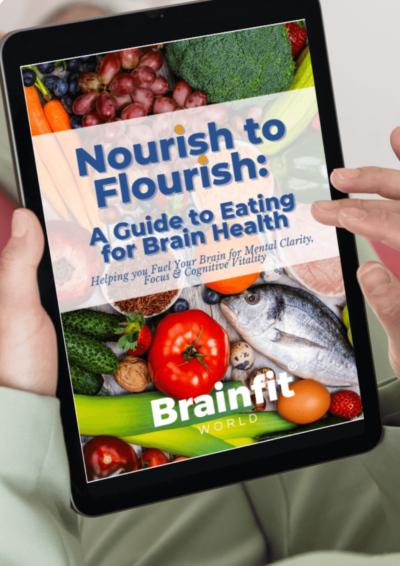
Healthy Diet: Fuel your brain with real food: vegetables, whole grains, healthy fats, and lean protein. Check out our Nourish to Flourish e-book for realistic, brain-friendly eating tips.
-
Prioritise Sleep: We get it – life is full on but sleep is non-negotiable for brain function. As it helps mitigate fatigue and improves cognitive clarity. Article 3 in this series offers Brainfit tips for reclaiming sleep during perimenopause.
-
Stress Reduction Techniques: Mindfulness, movement, breathwork – these aren’t luxuries. They’re brain essentials. See Article 4 for Brainfit’s favourite strategies to lower stress and improve clarity.
Seeking Support
Experiencing brain fog during perimenopause or menopause is common but that doesn’t mean you should suffer in silence. Your brain is not broken. These changes are often temporary, and with the right tools, you can feel like yourself again (or even better).
Whether it’s talking to your GP, working with a Brainfit coach, or joining a supportive community, don’t hesitate to reach out. The more we understand our brains, the more empowered we are to care for them.
And that’s why we created this Menopause & Memory Series: to help you better understand what’s happening and give you practical, science-backed ways to support your brain, your memory, and yourself.
Click here for Part 2 in this Menopause & Memory Series.